
Bridging the Valley of Death
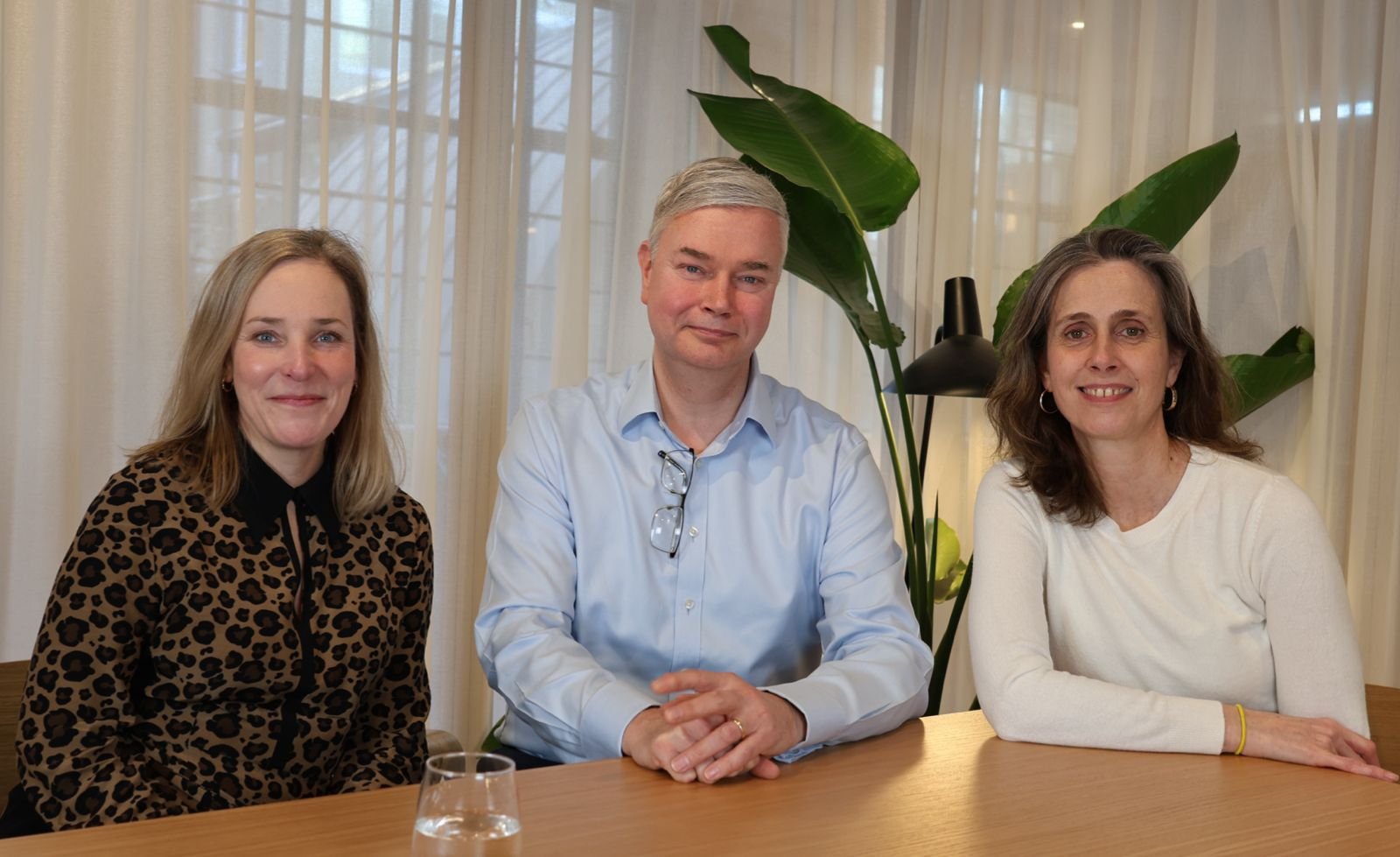
Sarah, Jim and Amy discussing FOAK
March 2026
Bridging the Valley of Death: A Conversation on FOAK Climate Projects in the UK
Amy Rennison is joined by Sarah Mackintosh and Jim Totty for the Earth Set podcast to explore one of the trickiest stages in the climate transition: getting technologies from pilot to first commercial scale.
The conversation is grounded in a piece of work the three have been involved in over the past few months: a research and landscaping exercise looking at First-of-a-Kind (FOAK) climate projects in the UK. But rather than presenting the findings as a finished answer, the discussion unpacks what that process revealed, where assumptions held up, and where the system feels more fragile than expected.
What follows is not a comprehensive account of the work, but a deeper look at the key themes that emerged through the conversation.
FOAK: A Different Kind of Problem
So what do we actually mean by FOAK? As Jim sets out, this is not about early-stage innovation. These are technologies that have already been proven at pilot or demonstration level. The challenge is something else entirely: delivering the first commercial-scale project, typically requiring tens of millions of capital and a completely different standard of scrutiny.
That distinction matters because it reframes the problem. At earlier stages, companies are rewarded for being novel, differentiated, even risky. At FOAK stage, those same characteristics become liabilities. What investors are looking for is not upside, but predictability: stable revenues, clear counterparties, well-understood risks.
As the conversation makes clear, this is not a gradual transition. It is a sharp pivot, and one that many companies are not prepared for.
The Shift Founders Have to Make
One of the most striking moments in the discussion comes as Sarah describes the change in narrative required from founders. Companies move from selling something “really cool and unusual” to venture investors, to trying to convince infrastructure capital that their project is, in effect, not unusual at all, but one that it is stable, low-risk, and financeable.
This is not simply a matter of presentation. It requires a fundamentally different approach to building the business: securing long-term offtake agreements, understanding supply chain risk, and structuring projects in a way that external parties can validate. It is, as the conversation suggests, a difficult transition to make quickly, particularly for teams that have spent years focused on technology development.
Capital Isn’t the Only Constraint
The conversation repeatedly returns to a point that runs counter to much of the standard narrative: FOAK is not simply a capital problem.
As Jim argues, infrastructure capital is available, but only for projects that meet a certain threshold of readiness. Without long-term offtake agreements, for example, projects are exposed to “merchant risk” — uncertainty over price and volume that makes future revenues impossible to forecast. For investors, that is a non-starter.
This brings the discussion onto a more uncomfortable insight. The issue is not just that capital is missing, but that many projects are not yet structured in a way that capital can engage with. In that sense, the constraint is as much about capability as it is about funding.
The Devex Gap
Closely related to this is the role of development expenditure: the capital required to get a project to the point where it can reach a final investment decision.
Although smaller in absolute terms, this funding is often harder to secure. It sits in a grey area: too risky for traditional lenders, too illiquid for venture capital, and too early for infrastructure investors. The result, as the conversation highlights, is a bottleneck at precisely the point where momentum is most needed.
Without a credible pathway through this stage, projects do not fail dramatically, but they simply stall.
A System That Doesn’t Quite Join Up
If there is a single thread running through the conversation, it is the sense of a system that is present — but not aligned.
Public capital is constrained, understandably, by its exposure to taxpayer risk. Private capital is structured to enter once projects are de-risked. Between the two sits a gap that neither is fully designed to fill. As Sarah puts it, this creates “a really strange ecosystem structure that just clearly still isn’t quite working”.
That misalignment extends beyond capital. Engineers, insurers, corporates, and investors all have a role to play in FOAK delivery, but there is no shared playbook for how that process should unfold. The result is fragmentation — and friction.
How the UK Compares
The discussion also looks outward, comparing the UK to other markets.
In the US, there is often a greater willingness to take early risk and to accept failure as part of the process. In parts of Europe, corporates play a more active role, stepping in as strategic partners or offtakers. The UK, by contrast, is more cautious. This is not necessarily a flaw, but it does shape outcomes. As several participants in the underlying research noted, companies will ultimately build where conditions allow them to do so.
And in some cases, that may not be the UK.
A Pipeline Waiting to Move
What makes this all the more striking is that the pipeline is there. Towards the end of the conversation, the focus shifts to what is actually emerging across the UK. The answer is: a great deal.
Projects spanning hydrogen, sustainable aviation fuel, energy storage, and advanced materials are moving towards this FOAK stage, distributed across regions from Teesside to Cambridge and beyond. The energy, commitment and ambition of the founders behind these projects comes through strongly in the discussion. As Sarah reflects, many of them do not want to go elsewhere. They want to build in the UK.
The question is whether the system allows them to.
From “Works” to “Built”
What the conversation ultimately surfaces is a simple but powerful distinction.
The UK is effective at getting technologies to the point where they work. It is less effective at getting them to the point where they are built. Bridging that gap is not a single intervention, but a combination of clearer pathways, stronger capabilities, and a more aligned ecosystem. FOAK is where all of these factors converge.
And, as this conversation makes clear, it is where the next phase of the transition will be won or lost.
🎧 The full conversation is available now as Episode 6, Series 2 of the Earth Set Podcast:
Bridging the Valley of Death: Scaling First-of-a-Kind Climate Tech in the UK
